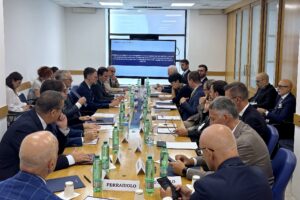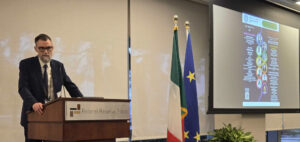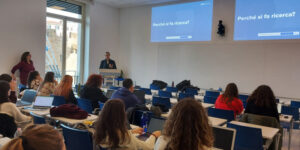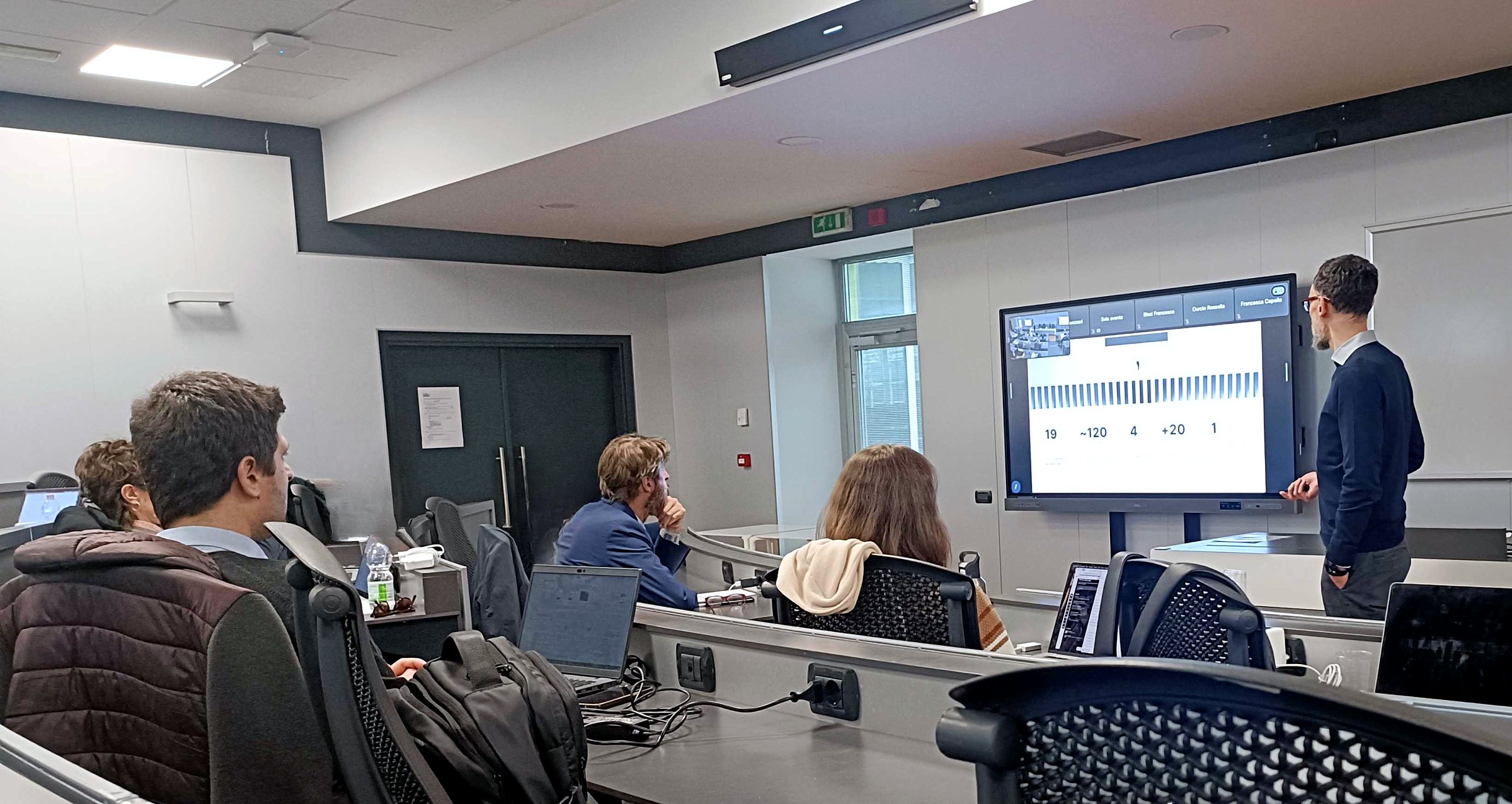
A workshop designed to help companies navigate Italy’s Open Innovation ecosystem. “AIxOI Design Lab” took place at Politecnico di Milano within the Open Innovation Lookout Observatory, with the aim of exploring the integration of artificial intelligence into business processes and examining how AI can support organisational innovation and generate tangible value.
Open Innovation is an approach in which companies innovate by opening up to collaboration with external players. Over the years, this approach has led to the development of a broad and diverse network of specialised operators. For companies, distinguishing among them and identifying the most suitable partner is not always straightforward. For this reason, the Observatory developed the first structured mapping of Open Innovation operators in Italy. The research analyses services, business models and market value through interviews, surveys and workshops involving experts, managers and entrepreneurs.
In 2025, the Observatory placed particular emphasis on Venture Clienting and on the contribution of AI to Open Innovation processes. The AIxOI workshop, designed by DOS Design, was part of this research path. DOS Design structured the work around a hypothesis: if AI can act as an accelerator for analysis and automation, design can provide the method needed to govern this capability and integrate it into everyday work. The workshop tested this hypothesis through a hands-on co-design experience.
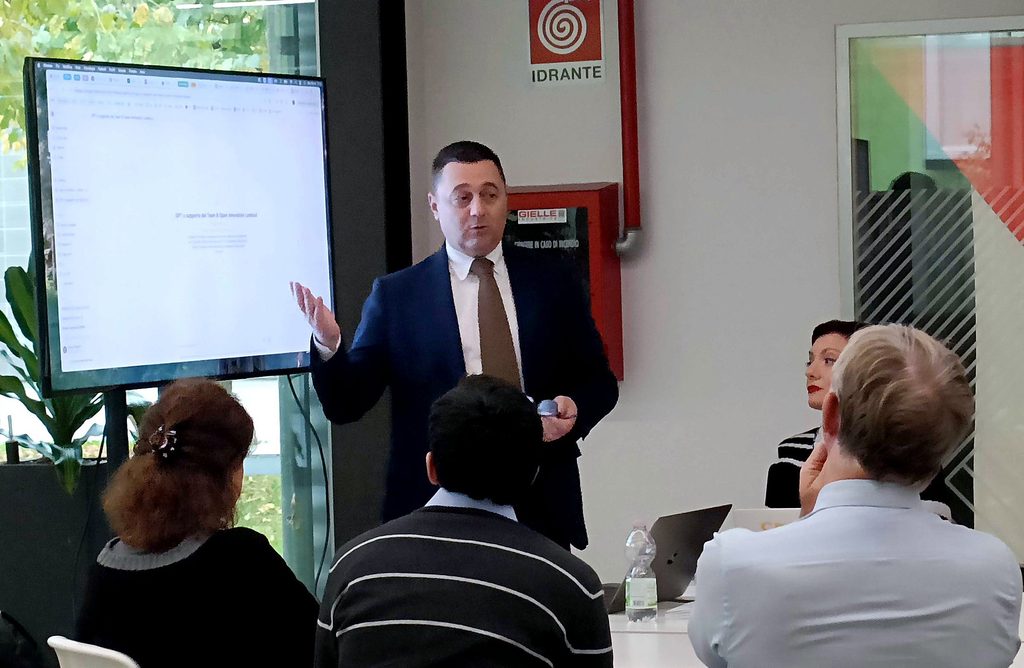
Venture Clienting is a model in which a company adopts a startup’s solution as a customer in order to test it and integrate it into its own processes. Managers, innovation specialists and Venture Client Leads took part in the workshop and were divided by DOS Design into three groups.
Each group focused on a different stage of the process. The first worked on problem identification and startup selection. The second focused on the pilot project and its integration into business processes. The third explored organisational learning and scaling. DOS facilitators with expertise in design thinking and knowledge management supported the groups throughout the activities.
The workshop produced four key outcomes. The first was an end-to-end map of the Venture Clienting process, co-created by participants and enriched by their direct experience. The map evolved from a theoretical model into an operational tool. The groups then translated the process into BPMN (Business Process Model and Notation), the standard notation used to represent processes. As a machine-readable model, it represents a first step towards interoperability and automation.
AI was then applied to the formalised process. The analysis compared it with relevant standards and reference methodologies, including ISO standards, and highlighted potential risk areas. Based on these findings, the groups identified targeted solutions, such as templates for capturing knowledge and adjustments to the workflow.
The group activities led to three main insights:
- During the workshop, AI provided useful decision support when applied to specific, formalised process knowledge. Generic data alone proved insufficient.
- Design helps surface implicit knowledge by starting from people and the real problems they face, alongside data from systems. This reduces the risk of automating processes based on incomplete assumptions.
- Formalisation connects knowledge with automation. Translating a process into a standard format such as BPMN makes knowledge reusable and creates the conditions for automation.